
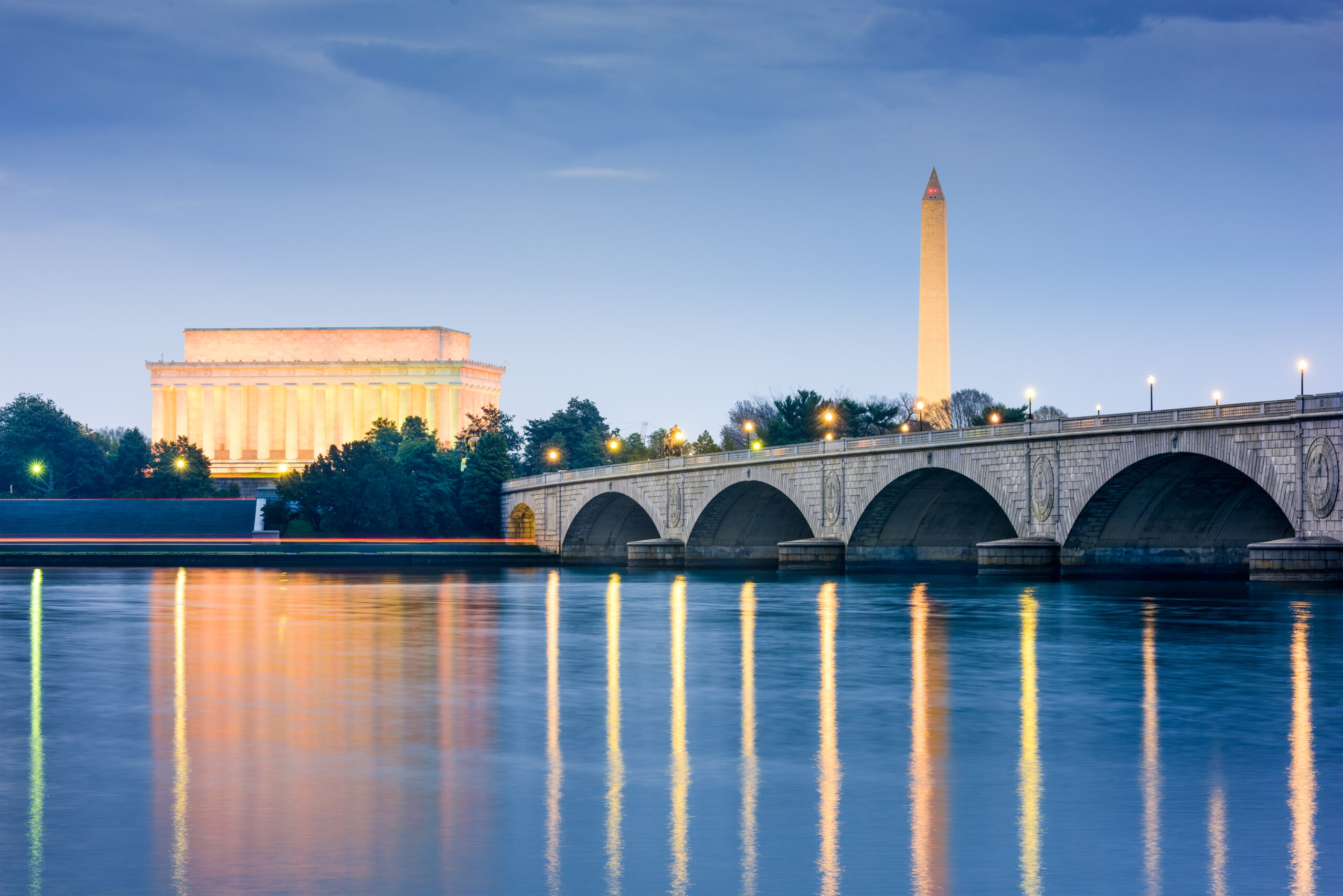
Join executive leaders from business, academia, the national laboratories, labor, and government at Council’s 2025 National Competitiveness Forum (NCF). The Council will host both the Gala Dinner on December 15 and the NCF on December 16 at the Salamander Hotel in Washington, D.C.
Salamander Washington DC
Gallery Ballroom
1330 Maryland Ave SW, Washington, DC 20024
Annual Gala Dinner
Date: December 15, 2025
Time: 6:00 P.M. to 9:00 P.M.
Attire: Business
National Competitiveness Forum
Date: December 16, 2025
Time: 7:15 A.M. to 4:00 P.M.
Attire: Business
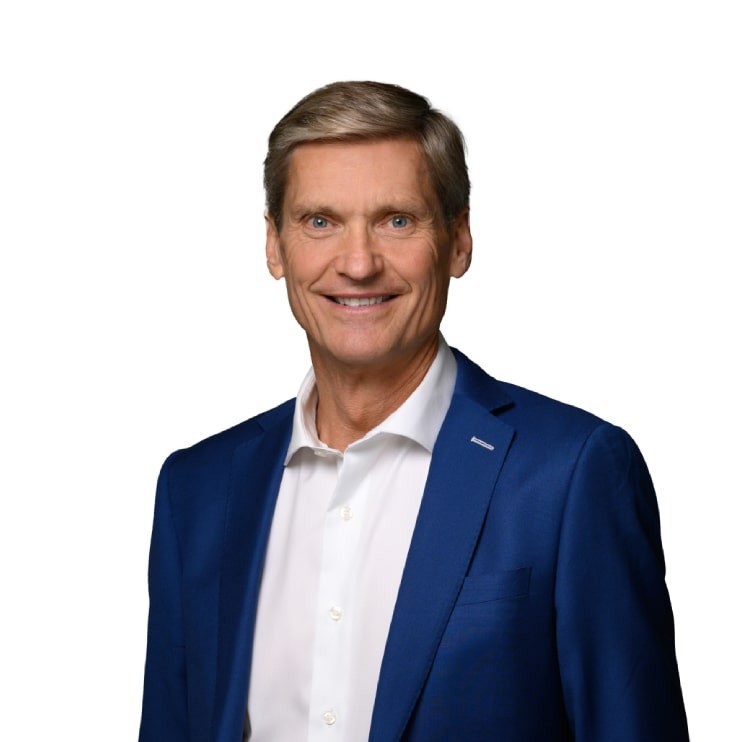
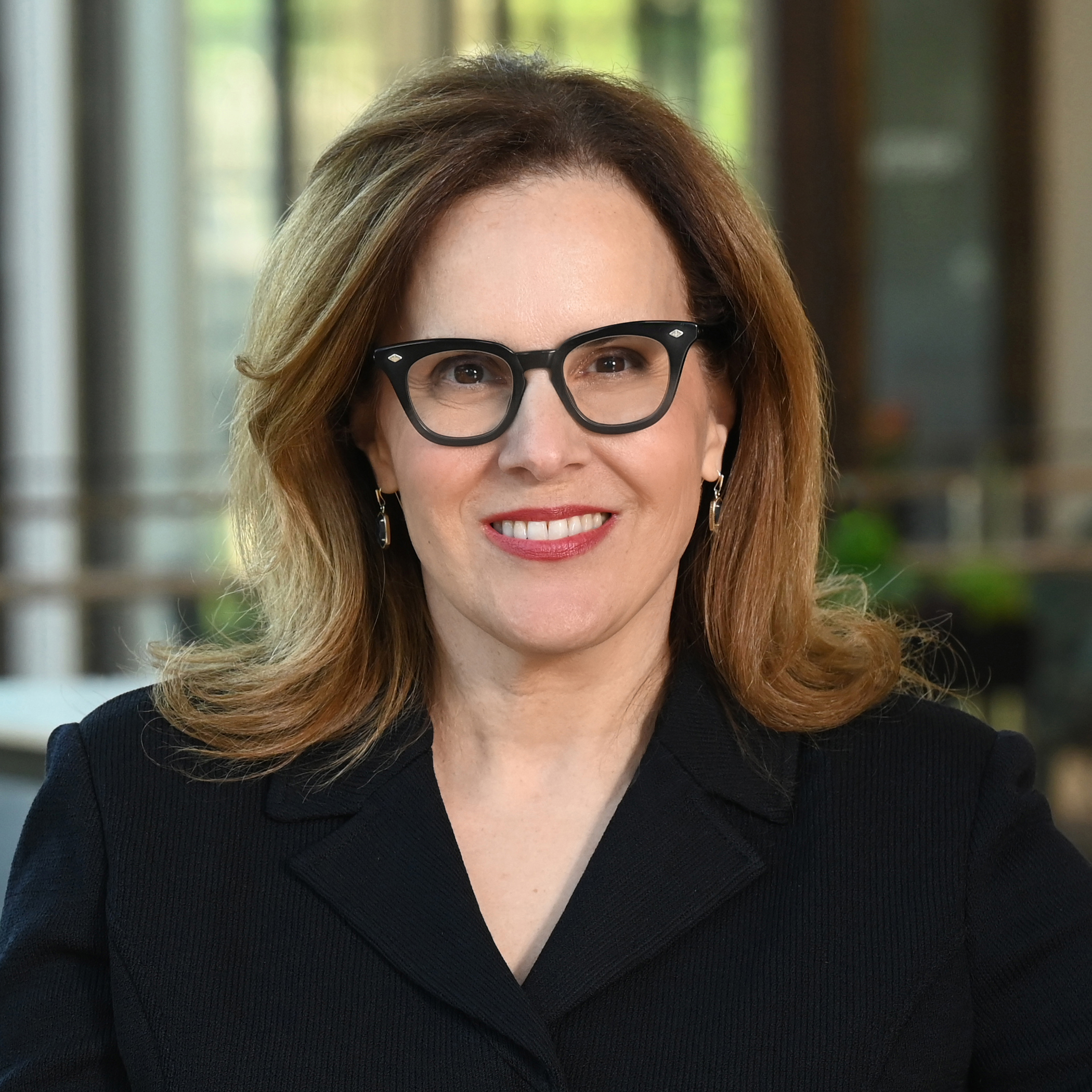

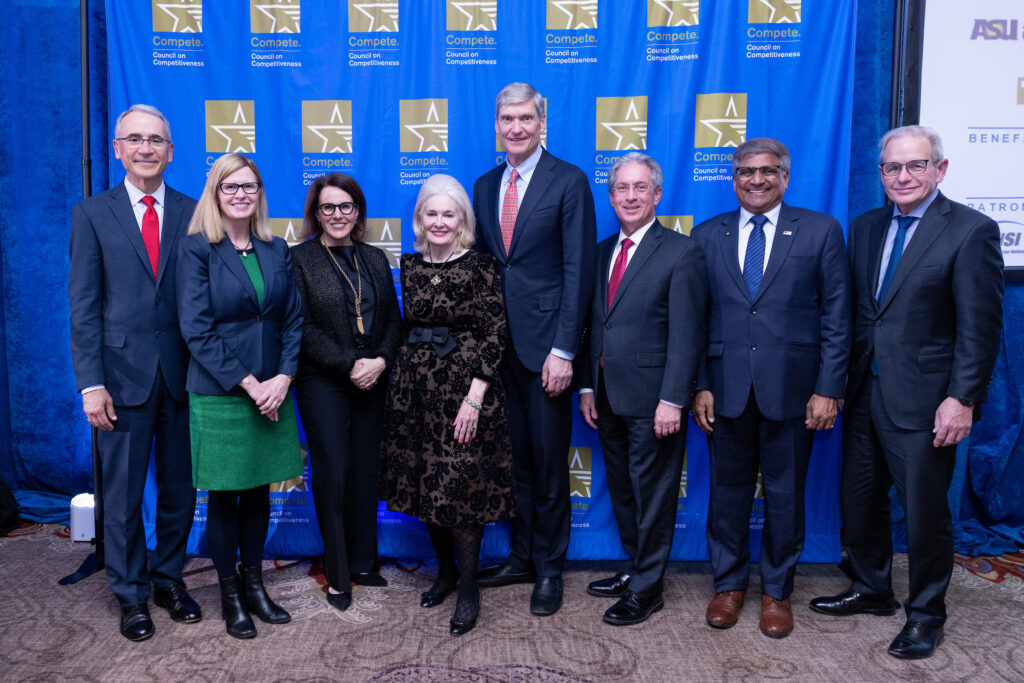
In this video, Council President and CEO the Hon. Deborah Wince-Smith welcomes attendees to the 2025 Council on Competitiveness Gala Dinner, and Mr. Erik Fyrwald, CEO, IFF, and Chair, Council on Competitiveness, who shares his vision for the Council.
Additionally, four special guests are awarded the National Competitiveness Award for their innovation and leadership in advancing U.S. competitiveness. The 2025 National Competitiveness Award recipients are:
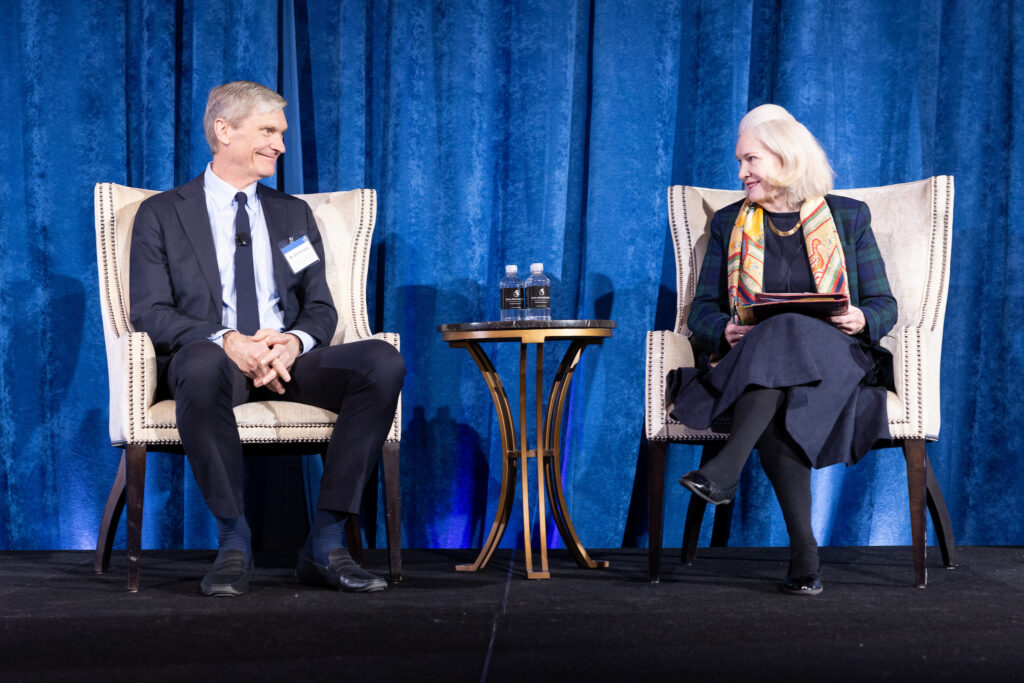
The 2025 National Competitiveness Forum opened with the Contextualizing Competitiveness: The Challenges and Opportunities for 2026 fireside chat, with the Hon. Deborah L. Wince-Smith, President and CEO, Council on Competitiveness, and Council Chair Mr. Erik Fyrwald, CEO of IFF. The pair outlined a forward-looking policy vision shaped by the economic, geopolitical, and political realities confronting the United States. This session frames the strategic landscape for the year ahead, examining the pressures and possibilities that will define U.S. competitiveness as the nation enters 2026 and beyond.
Prompted by questions from Dr. Elizabeth “Betsy” Cantwell, President of Washington State University, Dr. Marlene A. Tromp, President of University of Vermont, and the Hon. Sandy K. Baruah, CEO of Detroit Regional Chamber, Ms. Wince-Smith and Mr. Fyrwald discuss how institutions across industry, academia, and regional economies can align around a cohesive national strategy to strengthen growth, resilience, and global leadership.
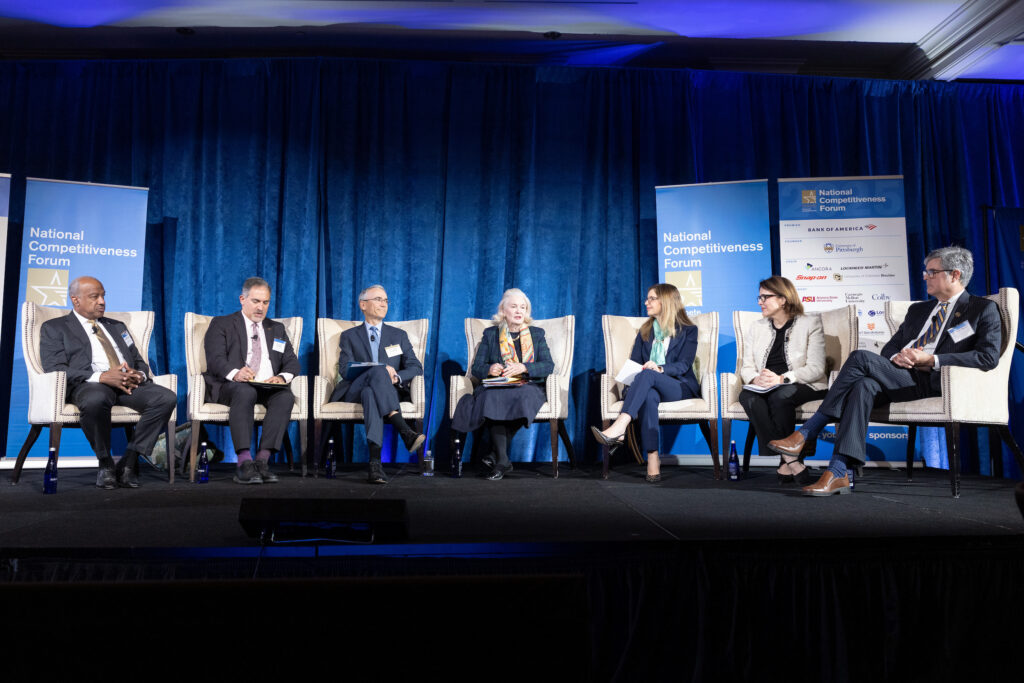
National leaders from academia, industry and national laboratories came together to examine the accelerating shifts reshaping U.S. productivity, prosperity and global leadership. From technological disruption to rising geopolitical competition, the discussion explores what it will take to secure the United States' competitiveness for the next 40 years. Moderated by the Hon. Deborah L. Wince-Smith, President and CEO, Council on Competitiveness, the panel features:
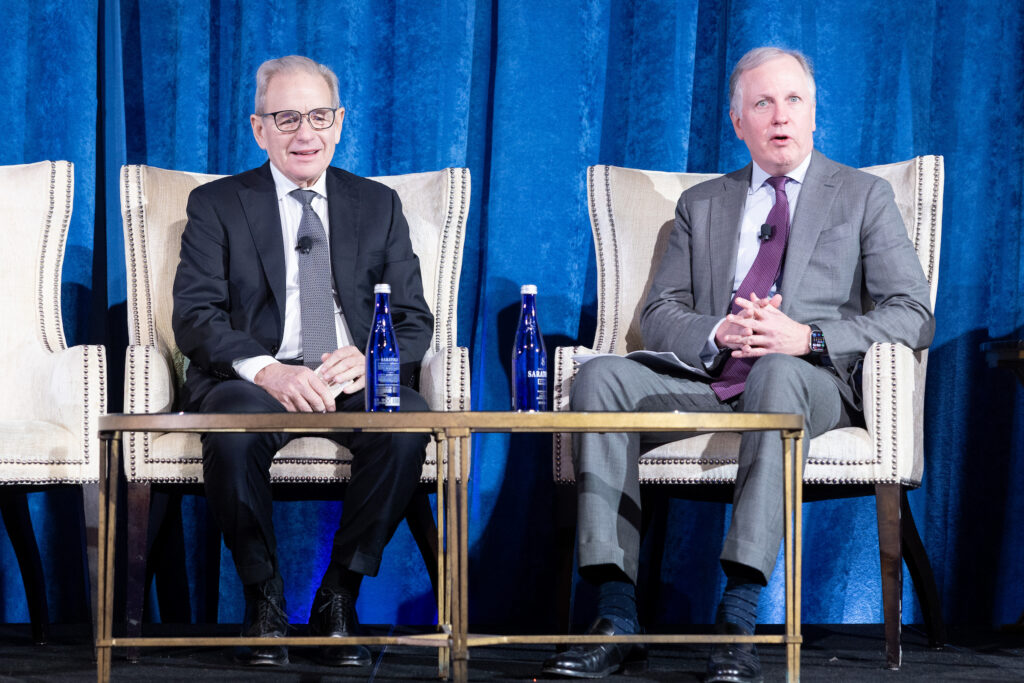
Mr. Charles "Chad" Holliday, Jr., Chair Emeritus, Council on Competitiveness, and Chair, Global Federation of Competitiveness Councils (GFCC), and Mr. Thomas Sheehan, Chair, Global Corporate & Investment Banking, Bank of America, explore the outlook for the U.S. and global economy and the evolving capital markets environment. The conversation provides a candid, forward-looking assessment of where growth, investment flows, and financial conditions are headed — and what it will take for the United States to remain competitive in a period of rapid economic and geopolitical change. The senior leaders examine risks, opportunities, and the strategic levers that will shape global competitiveness in the years ahead.
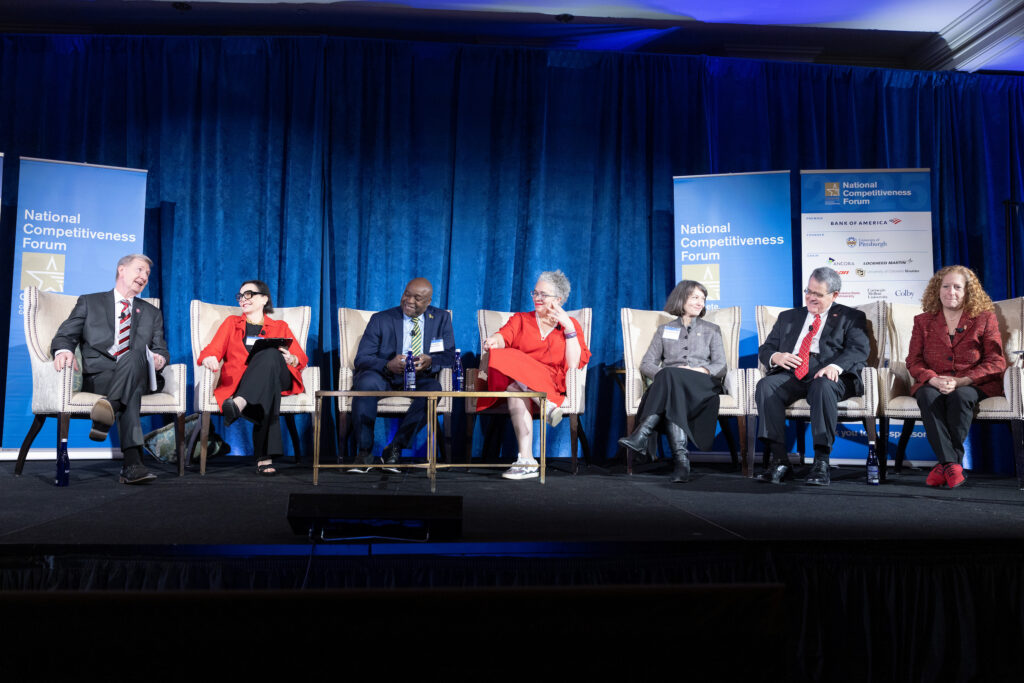
Leaders from top institutions of higher education examine how the United States' universities — long the backbone of the nation's innovation economy — are adapting to a period of profound transition. From mounting financial pressures and demographic headwinds to shifting public expectations and evolving workforce demands, this forward-looking discussion explores how institutions can continue to drive discovery, cultivate talent, and power the next economy. Panelists consider the bold changes, new partnership models, and strategic priorities required to ensure universities remain central to national competitiveness and long-term economic opportunity. The panel features:
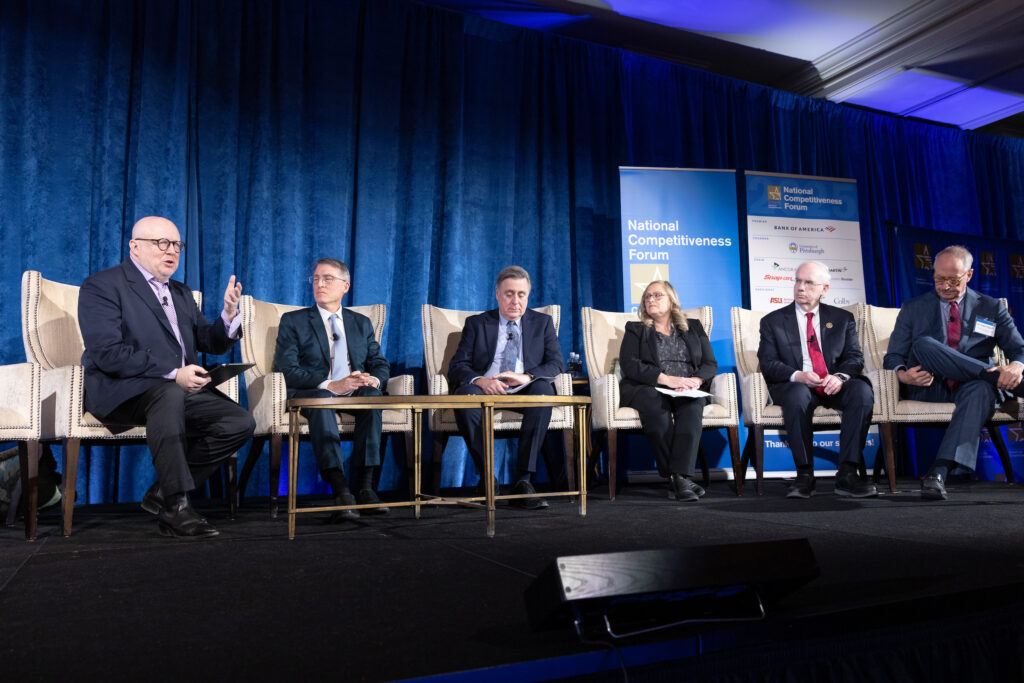
Leaders confront the urgent question of how the United States can innovate at speed and scale in an era defined by breakthroughs in AI, quantum, biotechnology, and advanced materials. Building on the Council's Compact for America — shaped by 50 leading CTOs over two years — this session explores bold recommendations to accelerate commercialization, expand the geography of innovation, and strengthen the nation's industrial and research base. Panelists examine the policy, talent, and ecosystem levers required to translate discovery into durable economic growth, national security, and shared prosperity — and the risks of inaction in a decade of intensifying global competition.
Moderated by Mr. Chad Evans, Executive Vice President and Chief Operating Officer, Council on Competitiveness, the panel features:
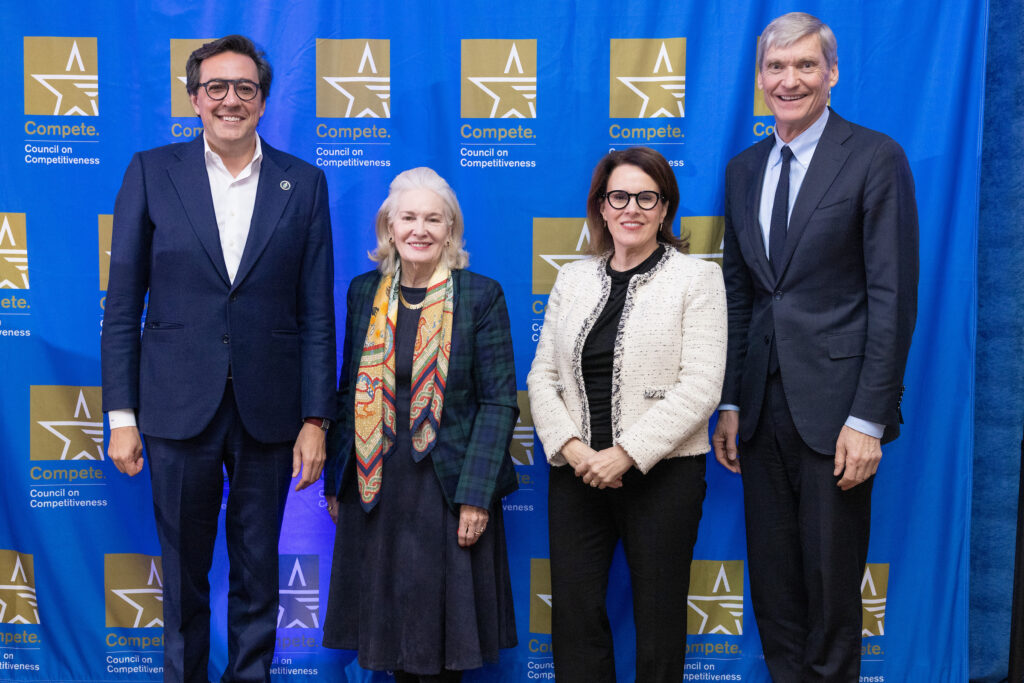
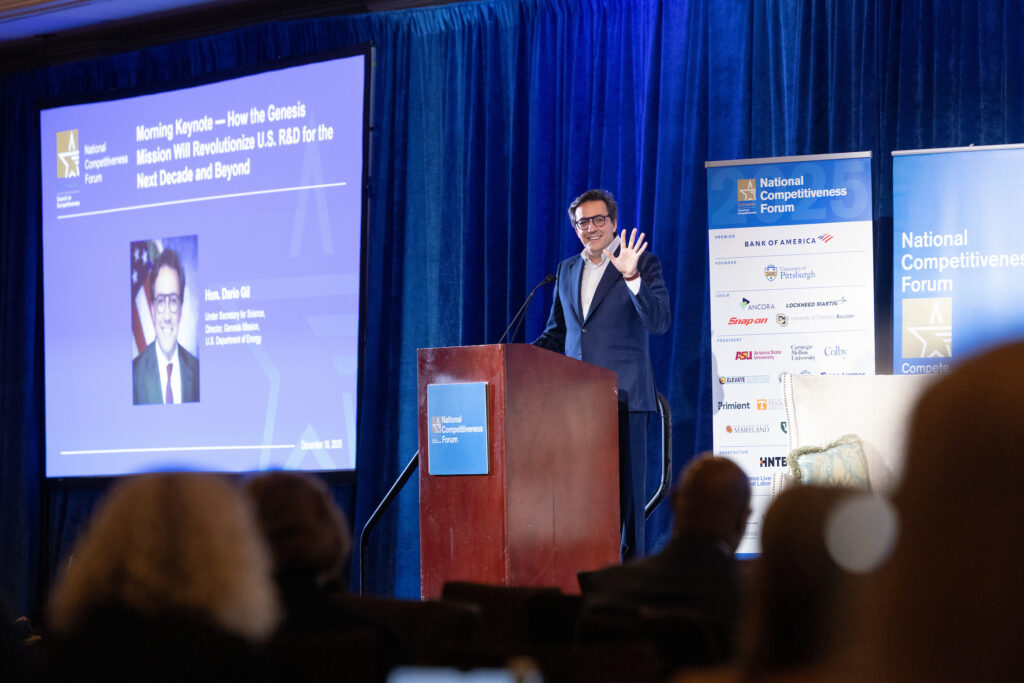
The Hon. Darío Gil, Under Secretary for Science and Director of the Genesis Mission at the U.S. Department of Energy, delivers the keynote address of the National Competitiveness Forum. With an introduction by the Hon. Deborah L. Wince-Smith, President and CEO, Council on Competitiveness, his keynote explores how the Department of Energy's Genesis Mission is poised to transform U.S. research and development for the next decade and beyond.
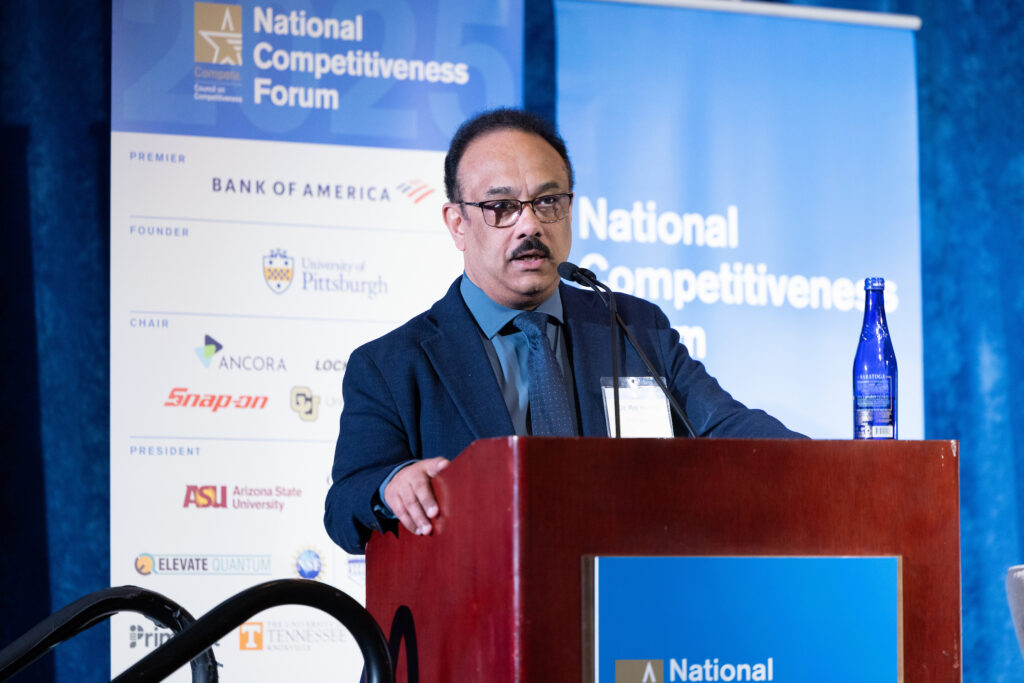
Dr. Raj Hazra, CEO of Quantinuum, explores how emerging technologies, particularly quantum computing, are poised to reshape the next era of U.S. competitiveness. His speech examines breakthrough developments in quantum technology and their implications for American innovation leadership.
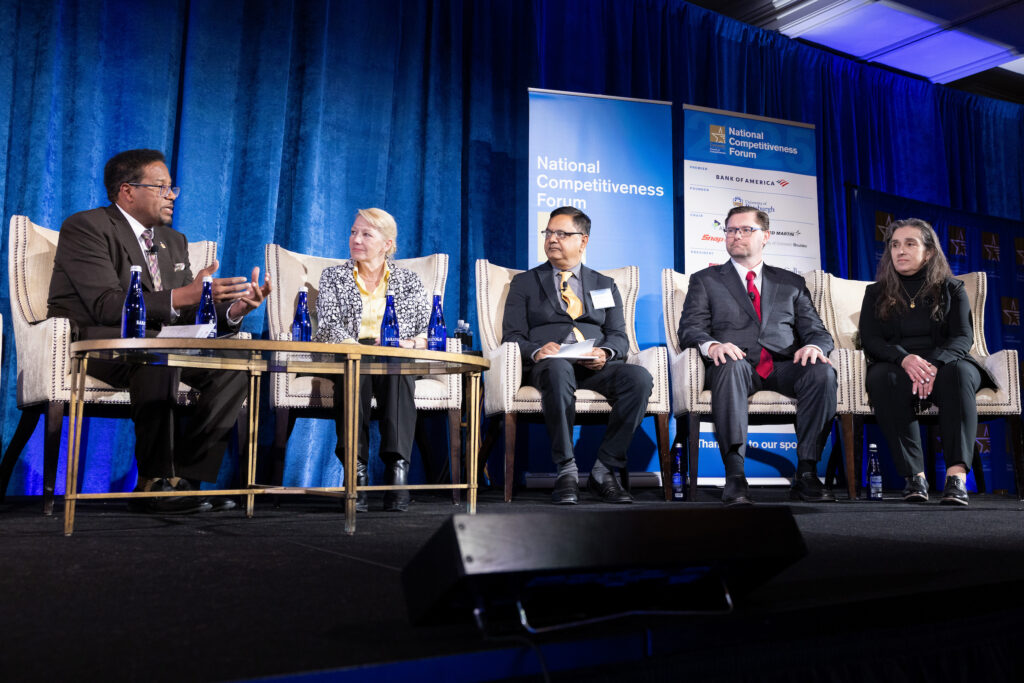
Leaders examine how advanced computing is redefining the frontiers of innovation — and what it will take for the United States to lead. As quantum breakthroughs, AI advancements, and supercomputing at scale accelerate discovery across biotech, energy, defense, and advanced manufacturing, this session explores how to deploy these technologies responsibly, securely, and at scale. Panelists discuss strengthening partnerships with allies and building the highly skilled workforce required to sustain U.S. leadership at the innovation frontier.
Moderated by Dr. Darryll J. Pines, President, University of Maryland, the panel features:
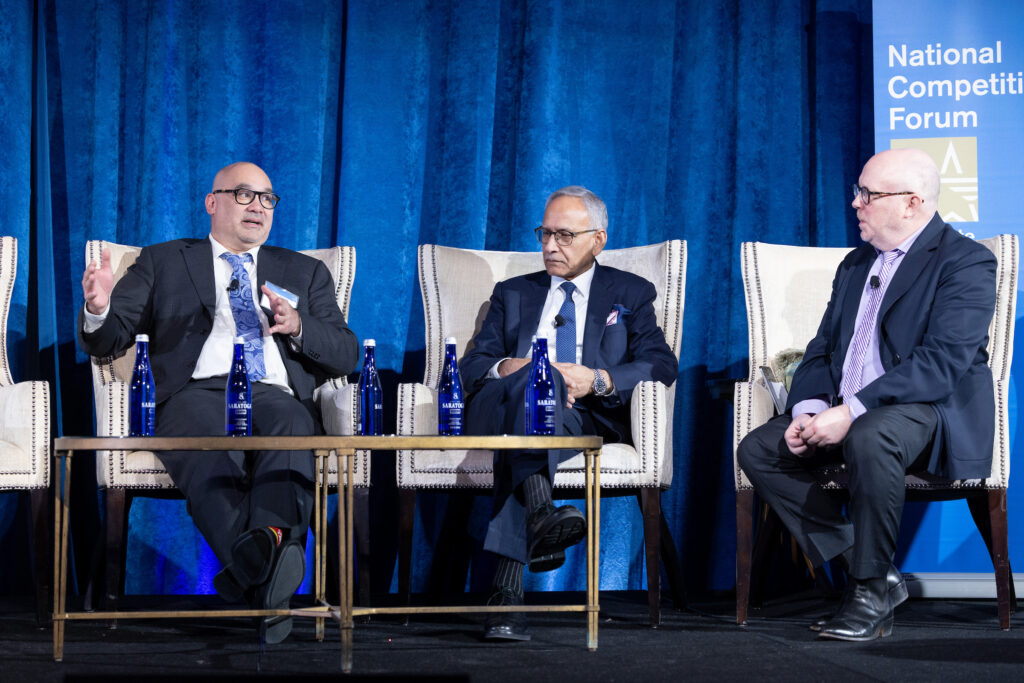
Dr. Mehmood Khan, CEO of Hevolution, and Chair Emeritus of the Council on Competitiveness, and Dr. Jason Paragas, CEO and Founder of DVLP Medicines, discuss how artificial intelligence is reshaping the life sciences and pharmaceutical landscape. Moderated by Mr. Chad Evans, Executive Vice President and Chief Operating Officer, Council on Competitiveness, the conversation explores the transformative potential of AI-driven drug discovery, development, and delivery systems.
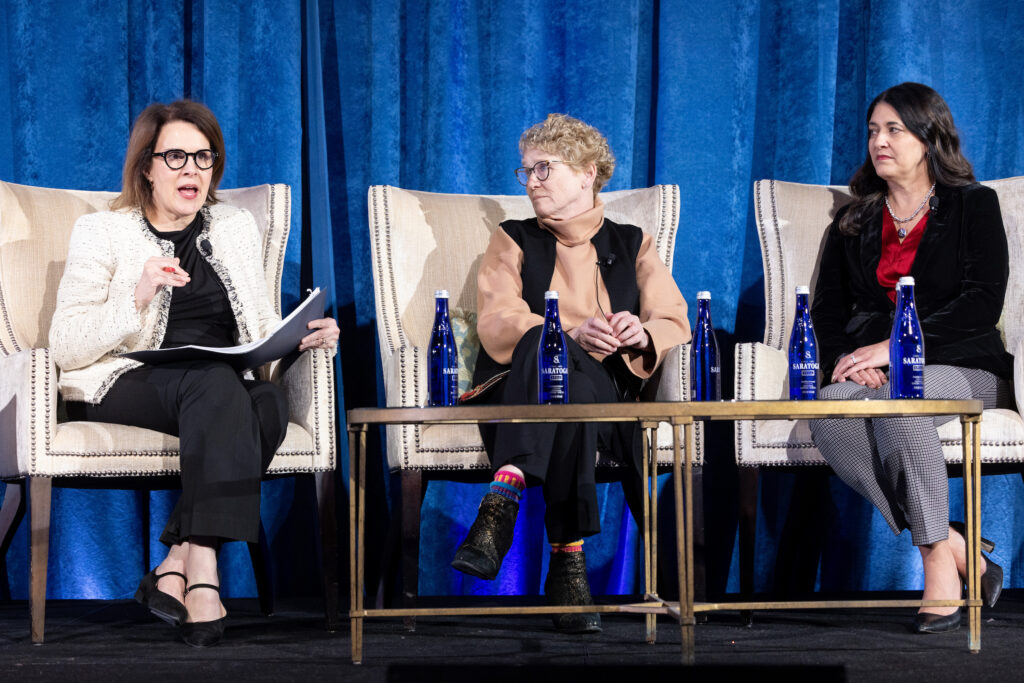
Rep. Stephanie Bice, U.S. Representative (R-OK), and Rep. Chrissy Houlahan, U.S. Representative (D-PA), discuss the policies, partnerships, and investments shaping the future of American biotechnology. As the bioeconomy drives innovation, advanced manufacturing, and economic growth, this session highlights bipartisan efforts to strengthen U.S. leadership in bio-based industries and ensure the nation remains competitive in a rapidly evolving global landscape. The discussion is moderated by Ms. Joan Gabel, Chancellor, University of Pittsburgh, and Academic Vice-Chair, Council on Competitiveness.
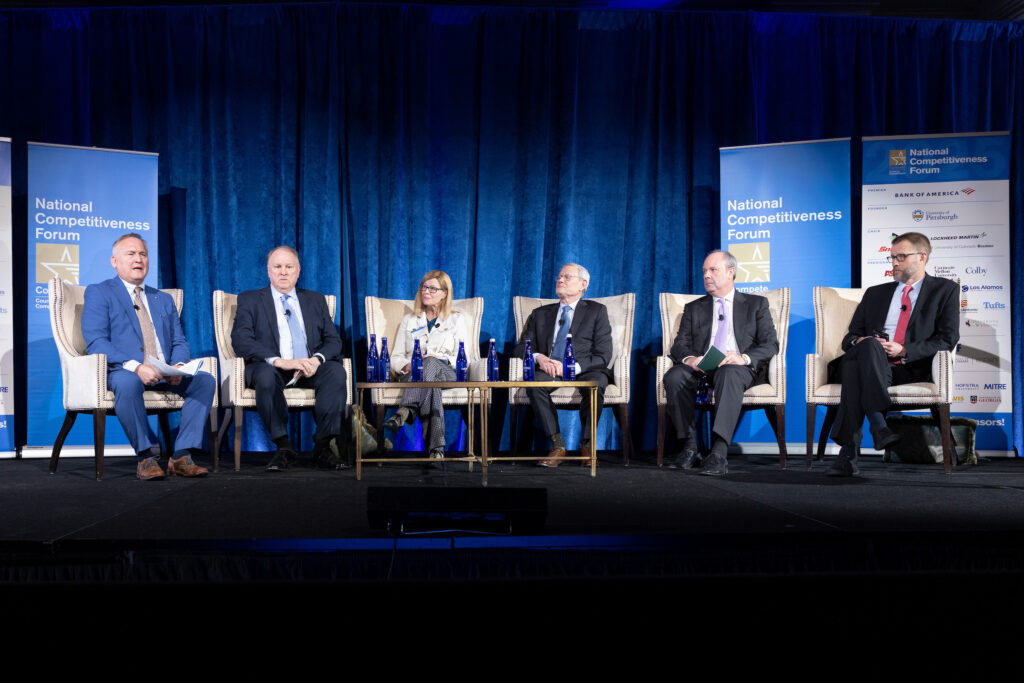
How can the United States position itself to capture the full value of a rapidly expanding global bioeconomy, projected to reach $30 trillion by 2050? The discussion focuses on defining the scope of the bioeconomy, strengthening key links across its value chain, and advancing policies that expand industrial capacity and high-wage job creation. Panelists explore breakthrough advances in genetic engineering, synthetic biology, and biomanufacturing, and how these innovations can enhance health outcomes, bolster supply chain resilience, and strengthen U.S. economic and national security.
Moderated by Dr. Jonathan McIntyre, Founding Partner, Nold Advisors and Distinguished Fellow, Council on Competitiveness, the panel features:
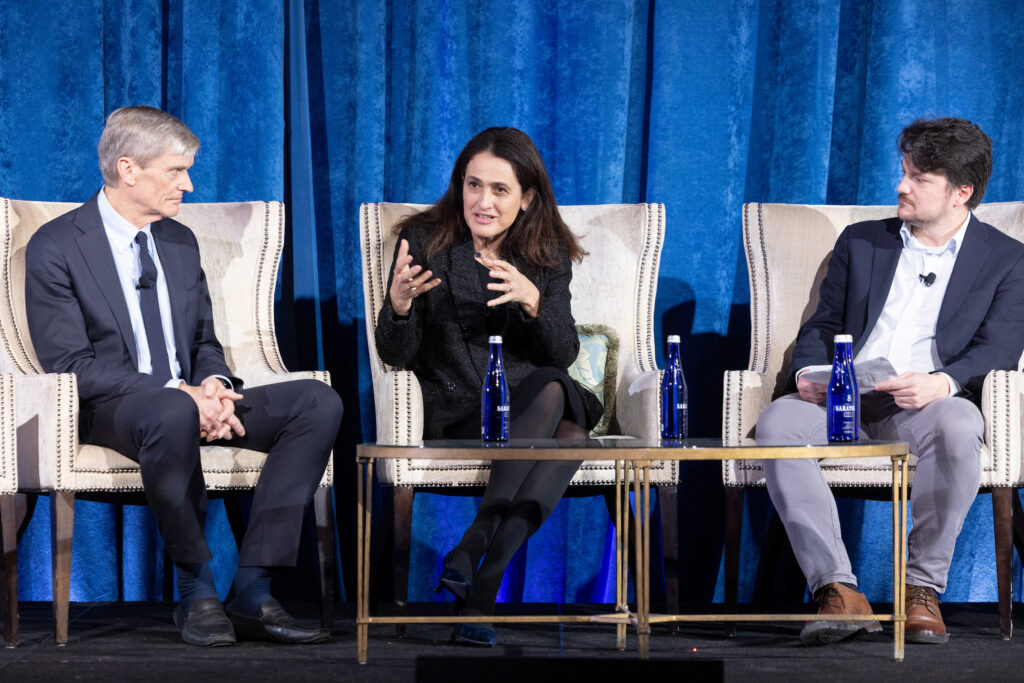
Ms. Ester Baiget, President and CEO of Novonesis, and Mr. Erik Fyrwald, CEO of IFF and Chair of the Council on Competitiveness, engage in a high-level discussion on how policy, innovation, and industry leadership can shape a stronger and more resilient American economy. Moderated by Mr. Vincent Valk, Senior Editor, Chemical Week at S&P Global, the dialogue explores how the United States can help set global standards for emerging technologies and strengthen collaboration between government and industry to accelerate advances in biotechnology, advanced materials, AI, and other critical sectors. And finally and importantly, what must U.S. leadership look like to remain the most attractive destination for investment, talent, and breakthrough innovation?
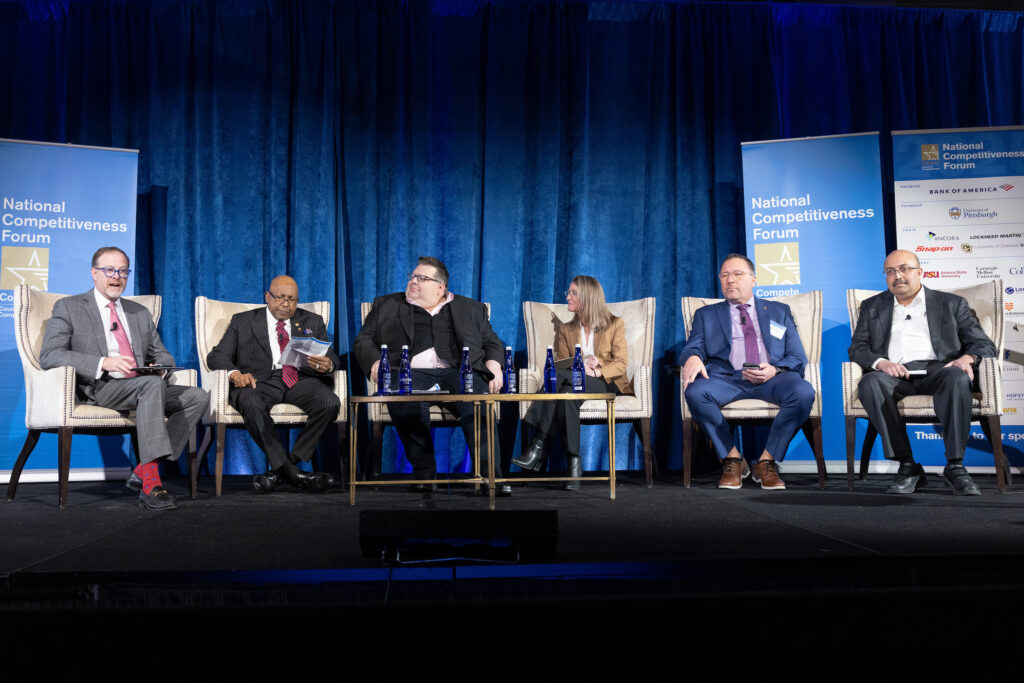
Leaders reflect on insights gathered since 2024 as the Council has traveled the country identifying bold ideas and next-generation approaches strengthening U.S. innovation capacity. The session highlights lessons from the 2025 Competitiveness Conversations Across America and previews what is ahead in 2026. Panelists explore what it means to be a "nation of innovators," how the concept of place is evolving in today's economy, and the enabling conditions required across industry, academia, national laboratories, labor, and government to expand innovation nationwide.
Moderated by Mr. Josh Parker, Chairman and CEO, Ancora, the panel features:
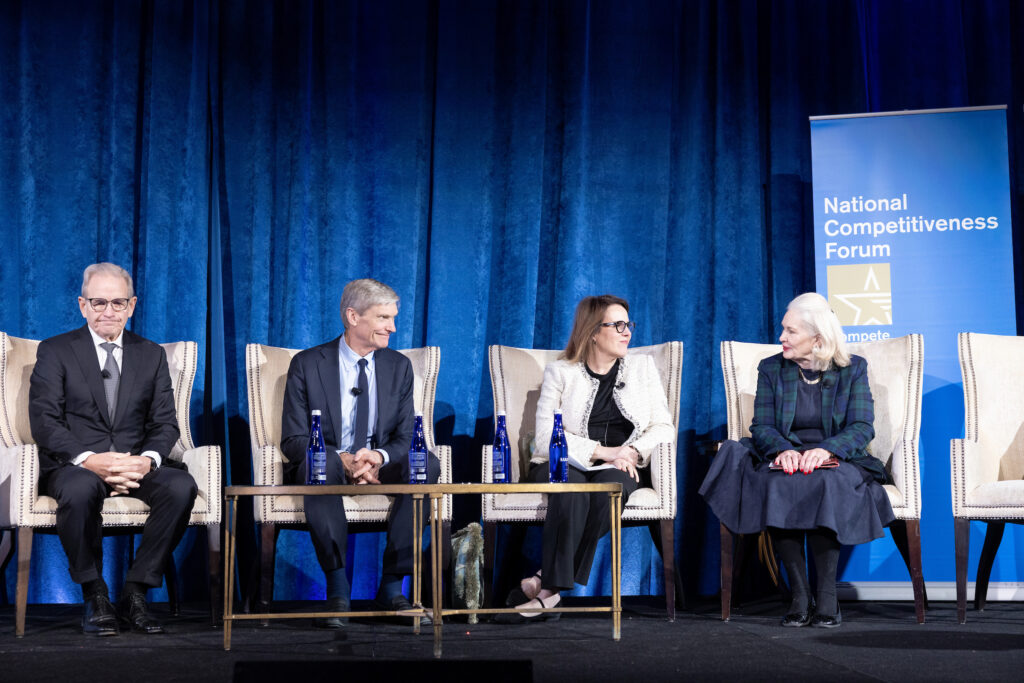
Council leaders closed the 2025 National Competitiveness Forum by translating a day of bold ideas into actionable next steps. Moderated by the Hon. Deborah L. Wince-Smith, President and CEO, Council on Competitiveness, the panel includes: