

Dr. Melissa Gilliam
President, Boston University
Dr. David A. Greene
President, Colby College
Dr. Robert Johnson
President, Western New England University
Dr. Marlene Tromp
President Designate, University of Vermont
Moderator: The Hon. Deborah L. Wince-Smith
President and CEO, Council on Competitiveness
New England is one of the nation’s most important centers of education, research, high technology, and finance — with reach across many industries. This panel discussed and connected two emergent and convergent domains: tech-based innovation across the blue and green economies. Panelists put into context the role each domain will play in advancing the region’s long-term innovation capacity and capability, economic and productivity growth, and inclusive prosperity. At the same time, leaders highlighted the best and next practices for New England and the United States.
Opening the first panel of the New England Competitiveness Conversation, Council on Competitiveness President and CEO Deborah Wince-Smith asked her fellow panelists a deceptively simple question: How do you define place-making innovation? For Colby College President David A. Greene, the first component was obvious: attracting talent. Having come to Maine from Chicago, he had transitioned from a place with one of the largest workforces in the country to one of the smallest. Dr. Greene was clear that demographics spelled trouble for New England; five of the top ten oldest states are in New England, as are five of the top six with the lowest birthrate. Bringing in young workers to New England is an existential problem for the region’s economy.
In order to help jump-start innovation in the state’s more rural areas, Dr. Greene has led a $52 million reinvestment project in Colby College’s hometown of Waterville, a former mill town which has experienced a multi-decadal trend of disinvestment and population decline tied to the milling industry’s downturn. However, a more recent strategy of investing in arts, in a new innovation center, and in other downtown amenities have provided a sense of vibrancy to the community. And more recently, Waterville has made concrete steps toward reversing its decline, boasting the development and deployment of 50 startups, along with a doubling of its tax base over the past decade. This sort of local place-making is not just vital for city budgets or cutting-edge startups; legacy industries need it to prosper as well. One community center in Waterville had to be built with imported wood – despite Maine being the nation’s most forested state, and forestry being a longtime mainstay of the state’s economy. But without a thriving local economies and ecosystems, these industries wither.
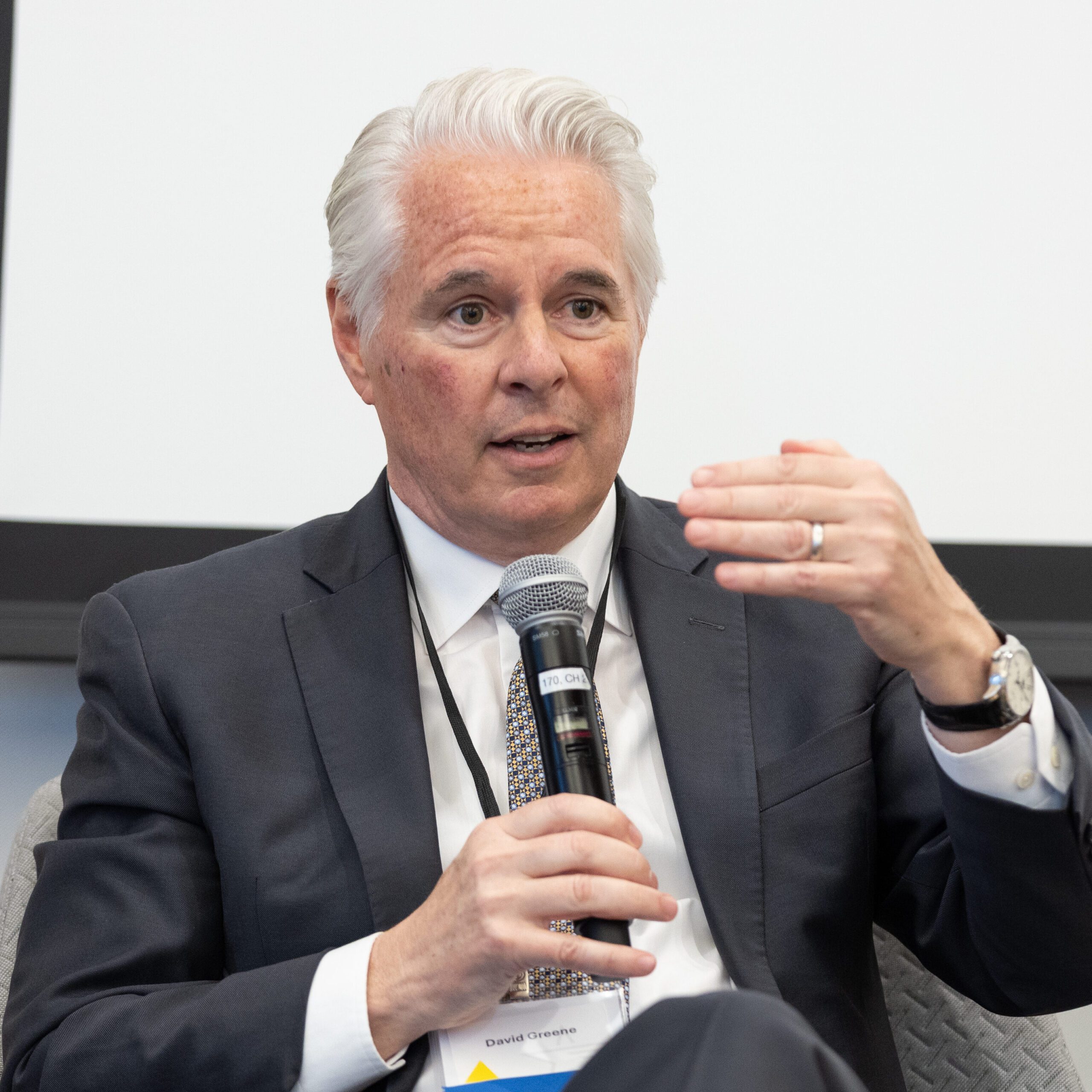
"It is absolutely critical to make sure we are bringing in younger workers. If there are not opportunities for them, you are going to see the oldest region of the country, with the lowest fertility rate, a region that has driven change for a long time simply fall off the map."
Dr. David A Greene
President
Colby College
Workforce concerns also loomed large for Western New England University President Robert Johnson, who, like his peers, is confronting the challenge of training students for successful careers in a rapidly evolving technological environment. A graduate today will, according to him, have up to 17 jobs across the span of their career – and many of these jobs do not yet exist. How can educators prepare and train students in an environment characterized by so much uncertainty and technological discontinuity? For Dr. Johnson, the answer is ensuring students possess a set of essential skills that differentiate them in the marketplace and that, increasingly, AI cannot replicate. Above all, this skillset must include the ability to “learn, unlearn, and relearn” ad infinitum as workplace needs shift over time. This way, his students are not only ready for the new jobs that emerge in the marketplace, but they are also ready to create the new jobs. Looking back on his own upbringing, Dr. Johnson noted how he was always told he had the power to make a difference in the world. He insists leaders today need to instill that same belief in new graduates.
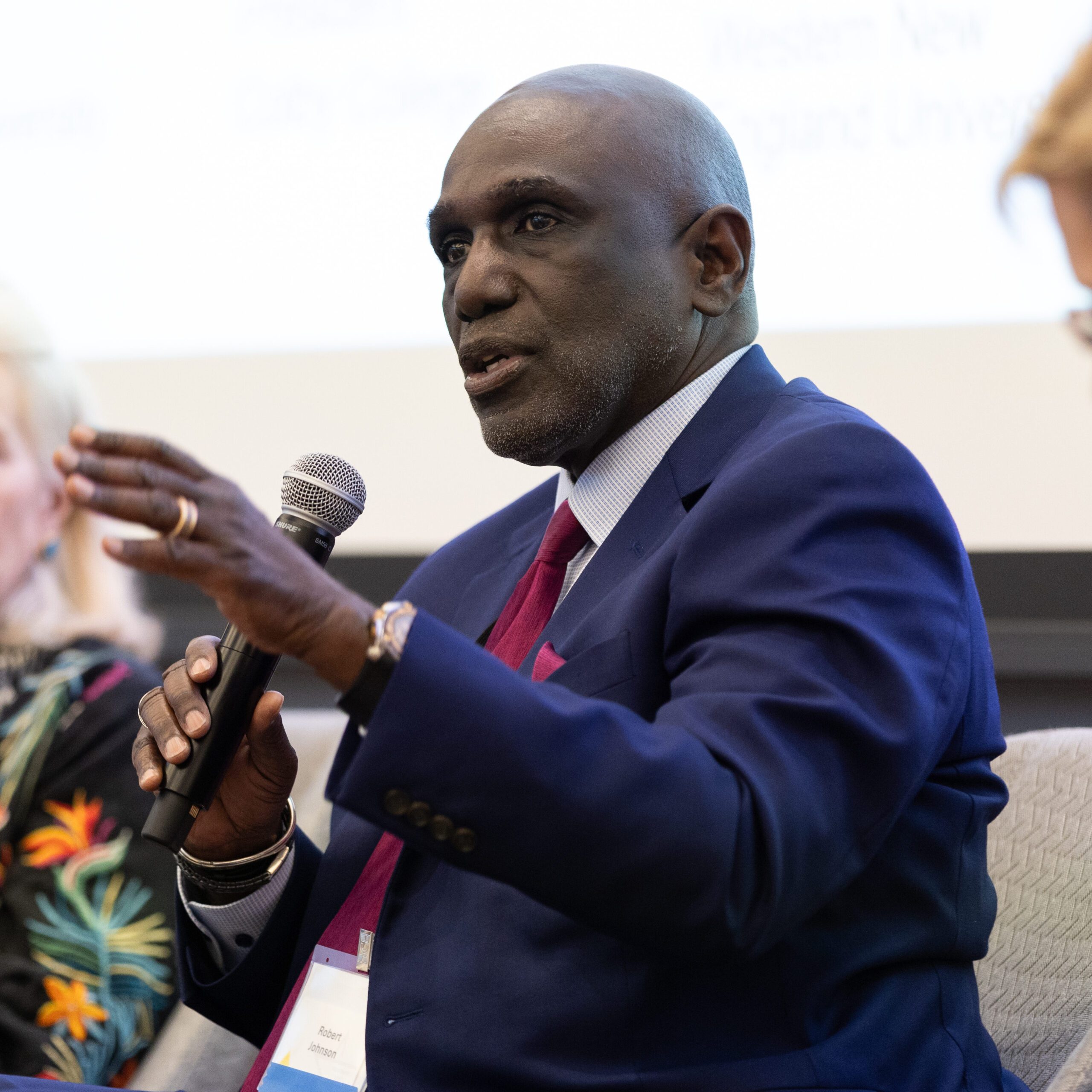
"If you do not understand that your work will become obsolete, you will become obsolete."
Dr. Robert Johnson
President
Western New England University
Boston University President Melissa Gilliam shared her belief that greater emphasis is needed on local "social determinants of health” that have an outsized impact on an individual’s quality of life and their ability to participate in the innovation economy. President Gilliam explained how addressing issues like ensuring patient care for vulnerable populations, addressing health inequities, and widening access to health insurance is not just a moral imperative. Addressing these issues is critical to community success. She drew a direct line between the success of the City of Boston in confronting these issues and the success of her school to carry out its educational mission, by widening the pool of people able to reach for a college education locally. While Boston University has a global reach through research, staying focused on the school’s local community, and providing opportunities to the students in its own neighborhood, is just as crucial to the university’s long-term advancement.

"What happens in the City of Boston affects what happens at Boston University. Their success is our success. We are a global institution, but our challenge is to stay locally responsible."
Dr. Melissa Gilliam
President
Boston University
Having just transitioned from her previous role as the President of Boise State University, University of Vermont President Designate Marlene Tromp shared how her experiences leading up to and in Idaho had shaped her overarching perspective on regional and place-making innovation. In particular, Dr. Tromp shared the incredible outcomes for a region that can emanate from thoughtful, strategic partnerships between major, local stakeholders – in the Idaho case, bridging a rich academic environment, with a strong national laboratory presence, with a vibrant, fast growing economy powered by industry (in Idaho’s case, the semiconductor industry). And these positive, local and regional place-making outcomes can scale. Today, the greater Boise area and Idaho in general are considered global leaders in advanced semiconductor design and manufacturing – with leaders like President Tromp taking part in and representing not only Idaho but the United States in key international fora, like recent G7 Summits. However, President Tromp focused her opening remarks on the critical partnerships struck and led with rural communities, supporting opportunities for local education. She signaled how the lessons she learned in Idaho around helping rural students access education at home – rather than facing a move to a more urban area – could be a model for states in New England, like Vermont.

"If we can build partnerships out in rural communities, you can not only provide great education, but help these communities thrive."
Dr. Marlene Tromp
President Designate
University of Vermont
Asked by the Hon. Wince-Smith whether new models of partnership with industry were needed, Dr. Gilliam noted how, during her time at the Ohio State University, she had overseen robust university collaborations with industry. Her focus was dual track: for the students, “who is graduating from our university, and what skills do they need to have? For the faculty, how do you take their innovations and get them out into industry?” Dr. Greene pointed out that in Maine, partnerships with industry was a more difficult proposition simply because there are fewer industrial players with which to partner. His focus is on attracting more industry to his state by both positioning Maine as a lower-cost alternative to other states, and by working with laboratories in the state to create technologies the existing local industries, like shipbuilding, need. Dr. Johnson supported that idea, pointing to a contract his school has to train people in the trades needed for advanced manufacturing, especially in the maritime space. He argued for doing “more of the same,” doubling down on New England’s legacy industries like shipbuilding and taking advantage of the region’s historic strengths.

"University strategic partnerships with industry are critical for place-making innovation. Do we need new models, or do we need to continue to ratchet up what we have been doing?"
The Hon. Deborah L. Wince-Smith
President and CEO
Council on Competitiveness
Dr. Tromp, a Victorianist, drew a parallel between today’s emergence of AI and the late 19th century, with technology upending long-established ways of life – sparking pushback. She made clear that universities cannot rely solely on science and engineering to solve problems – the arts, humanities, and social sciences will be critical to helping society as a whole adjust to the new, disruptive technologies – like AI – emerging on the horizon.
Asked to give one final word to encapsulate New England’s innovation economy today, and how it needs to evolve, Dr. Tromp chose “re-thinking” as educational models are upset. Dr. Johnson chose “agility” as a call for universities be ready to adapt to changing conditions. Dr. Greene chose “partnerships” as the underlying factor defining regional success, and Dr. Gilliam chose “convergence” to highlight the need for New England to pull together its diverse players into a cohesive, unified innovation ecosystem with a single vision. The Hon. Wince-Smith ended by adding “thriving” to the mix, as the region seeks to boost the prosperity of all its people by expanding the scope of the innovation economy.