
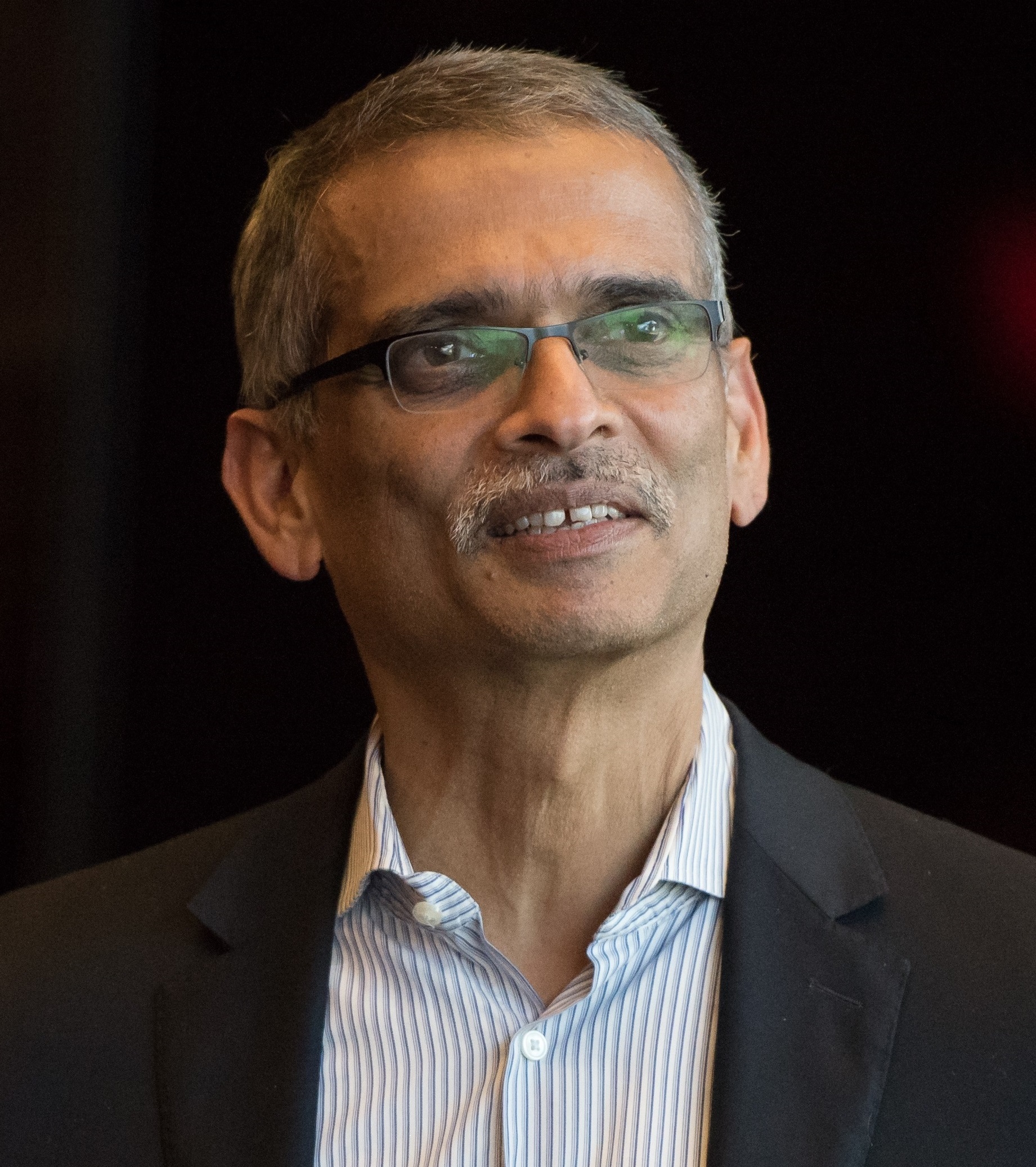
Ramesh Rao, PhD, is the Director of the Qualcomm Institute at the University of California San Diego, which is the UCSD division of the California Institute for Telecommunications and Information Technology (Calit2). In addition to being a Distinguished Professor in the Department of Electrical and Computer Engineering at the Jacobs School of Engineering, he also holds the Qualcomm Endowed Chair in Telecommunications and Information Technologies.
Dr. Rao has been a UC San Diego faculty member since 1984. He earned his PhD and MS in Electrical Engineering from the University of Maryland, College Park, and his bachelor’s degree from the University of Madras. Before leading the Qualcomm Institute, he served as Director of UC San Diego’s Center for Wireless Communications. Dr. Rao is an IEEE Fellow and Senior Fellow of the California Council on Science and Technology. His honors include the University of Maryland ECE Distinguished Alumni Award, the National Institute of Technology Distinguished Alumnus Award, the Gordon Engineering Leadership Award, and the Casa Familiar Abrazo Award for engagement with underserved San Diego communities.
At the Qualcomm Institute, Dr. Rao has helped shape a collaborative model that brings together university researchers, industry partners, public agencies, entrepreneurs, artists, clinicians, and community organizations to address complex challenges that do not fit neatly within a single discipline. Under his leadership, the institute has supported work in wireless systems, immersive media, cybersecurity, digital health, nanoengineering, robotics, quantum information science, and data-driven discovery. He has led dozens of major interdisciplinary initiatives and served as principal investigator on numerous federal-, state-, foundation-, and industry-funded grants.
For the Council on Competitiveness session “Transformative Computing: Coding America’s Next Economy,” Dr. Rao brings deep expertise in the convergence of computing, communications, AI, quantum, networks, and applied innovation. As moderator, he is well positioned to connect advances in transformative computing to new applications, industries, jobs, and the role of San Diego and California in strengthening America’s innovation economy.